AnalogLab by Coherence Engine
AnalogLab: follow the signal to the qubit.
Models the analogue control path, room temperature to the qubit and back.
1
The signal, part by part, up the example chain.
Every part has its own place in the fridge, at its own temperature.
Example readout chain: the six plates of our demo design. Other designs use other plates.
The chip being read. Its faint signal starts here, at the resonator.
The signal climbs the chain, and each part does one job.
- ISO1
- Lets the signal out, stops noise getting back in.
- CBL1
- Carries the signal up to the 4 K amplifier.
- HEMT1
- Makes the faint signal louder.
- ADC1
- Reads the result, at room temperature.
Noise picked up on the way makes the readout mistake a 0 for a 1.
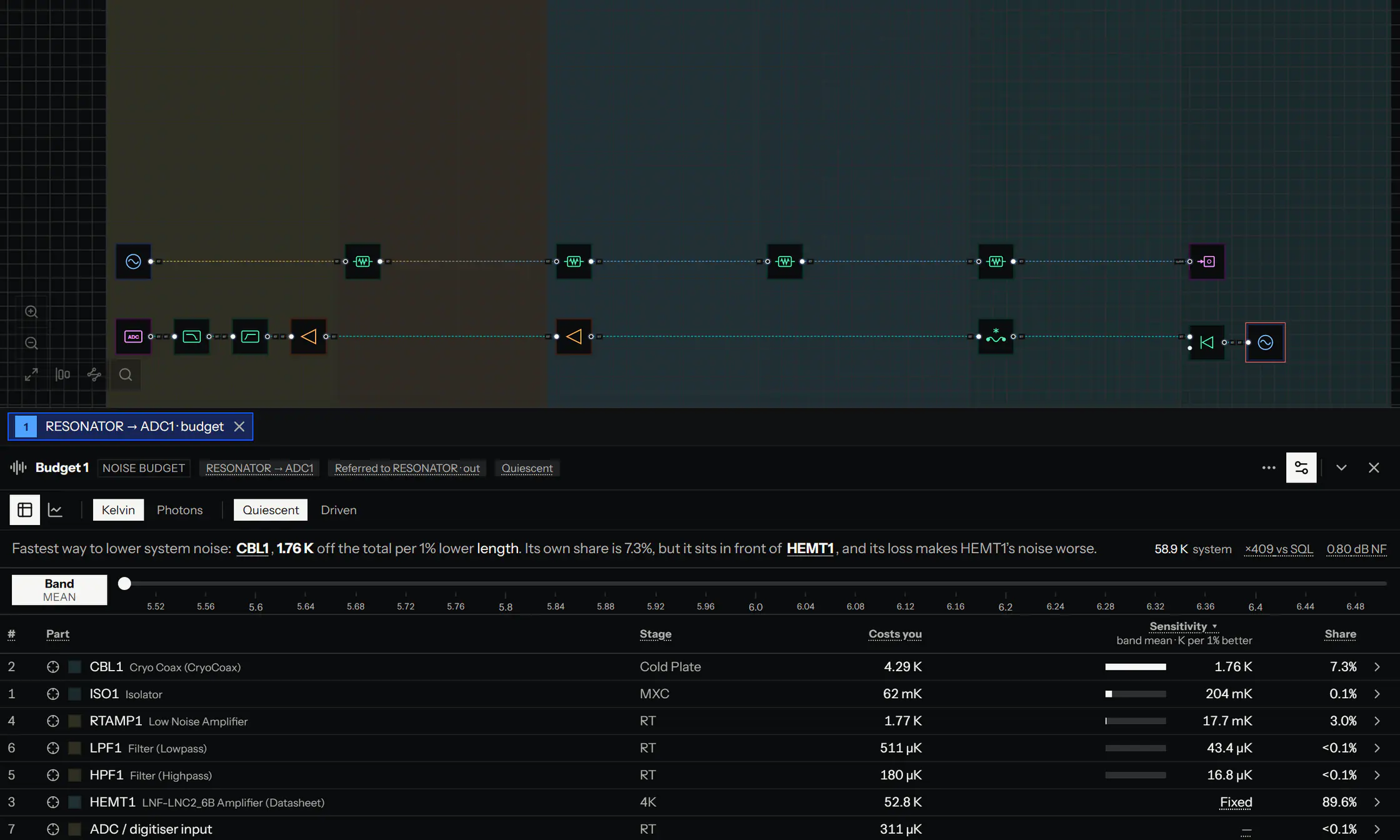
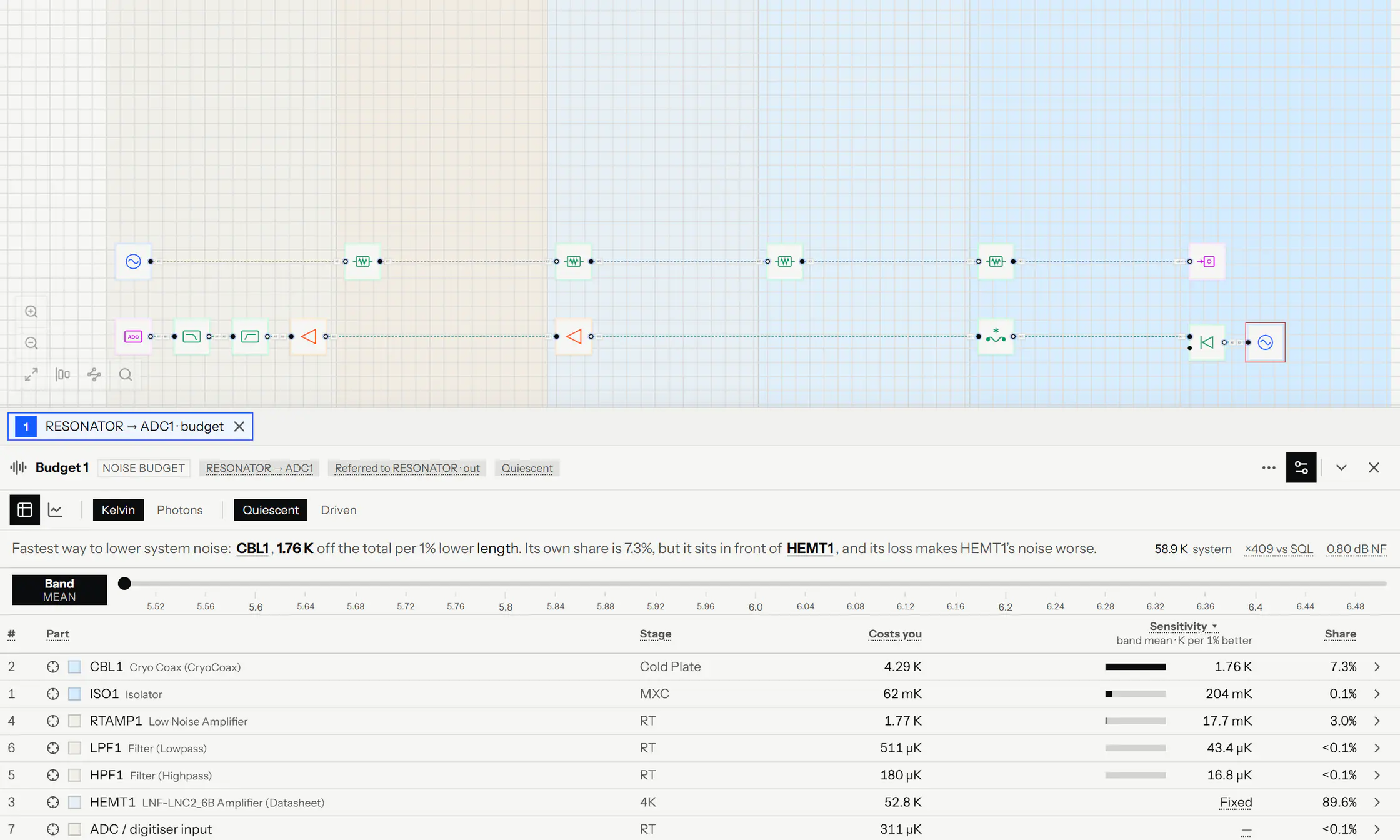
Most of that noise has one source. The amplifier HEMT1 adds 89.6 % of it, the cable CBL1 7.3 %. But HEMT1’s noise reaches the input magnified by the loss of CBL1 in front of it, so the cable is the fastest fix.
Shares: HEMT1 89.6 %, CBL1 7.3 %, RTAMP1 3.0 %, ISO1 0.1 %.
The same chain with a NbTi cable and the LNF-LNC4_8F amplifier: system noise falls from 58.9 K to 2.46 K, and the chain passes.
2
Where the noise comes from.
Probe anywhere along the chain. HoverTap a part’s bar and the part lights wherever this page names it.
3
AnalogLab, in four views.
Compare parts, build the chain, probe the signal, budget the noise.
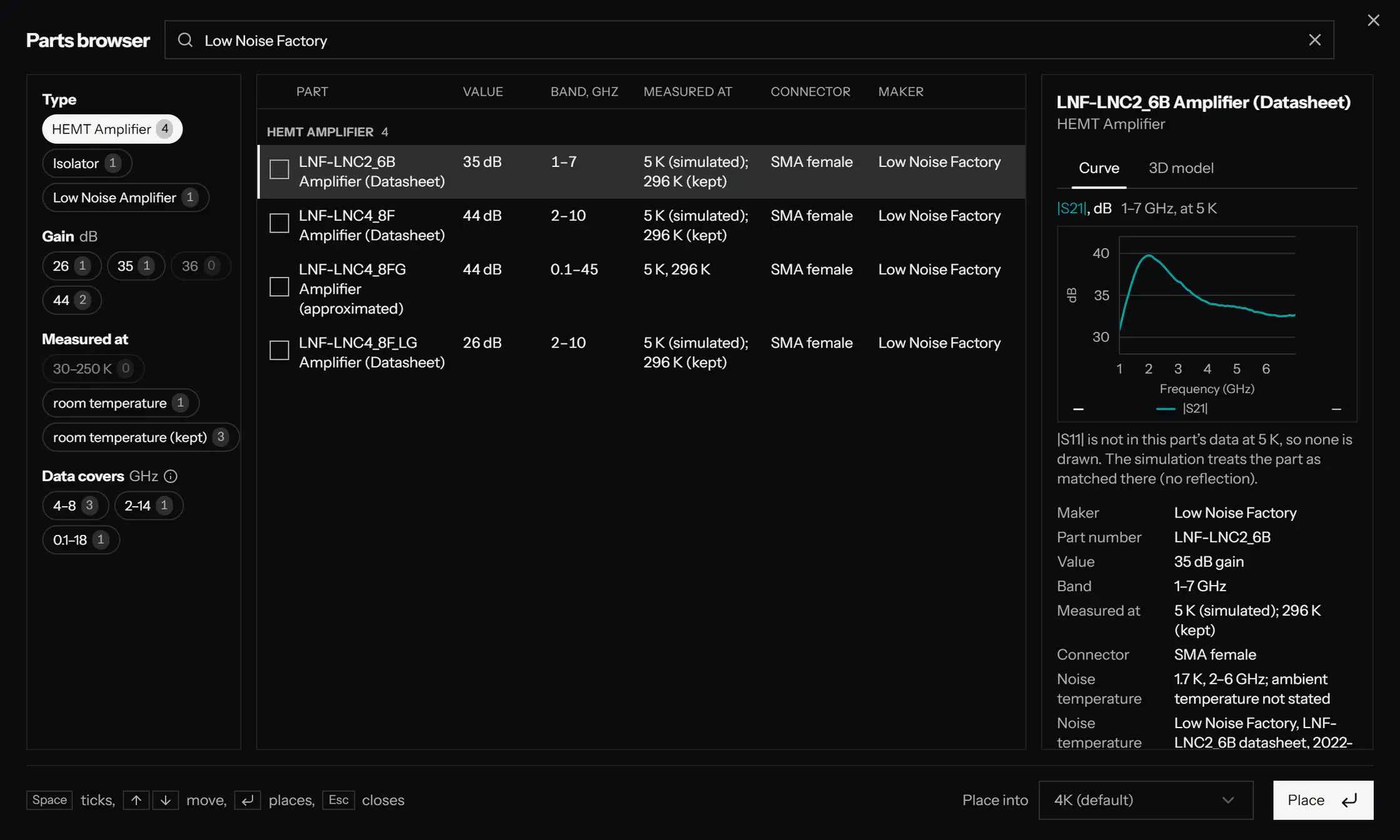
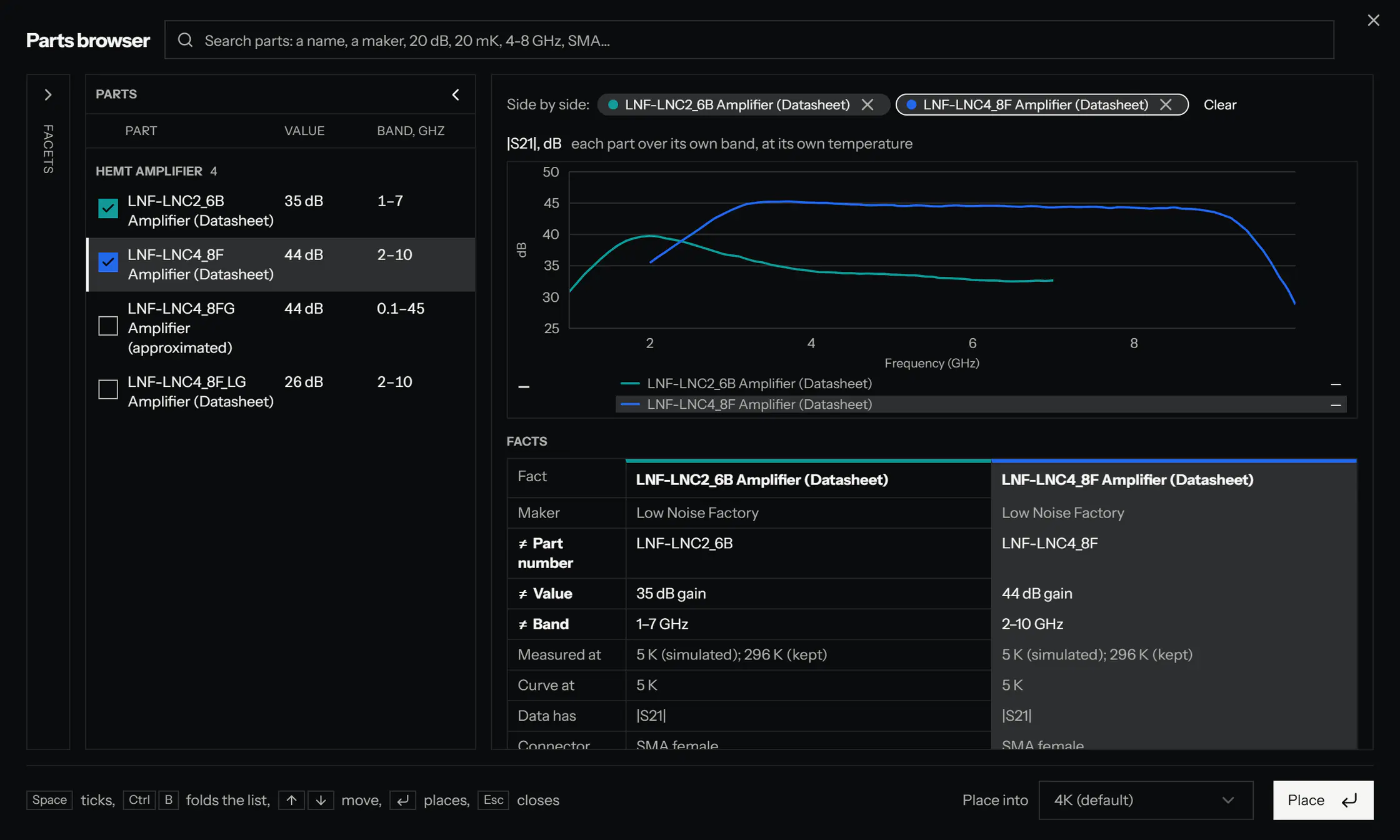
Swipe the screenshot sideways to see all of it.
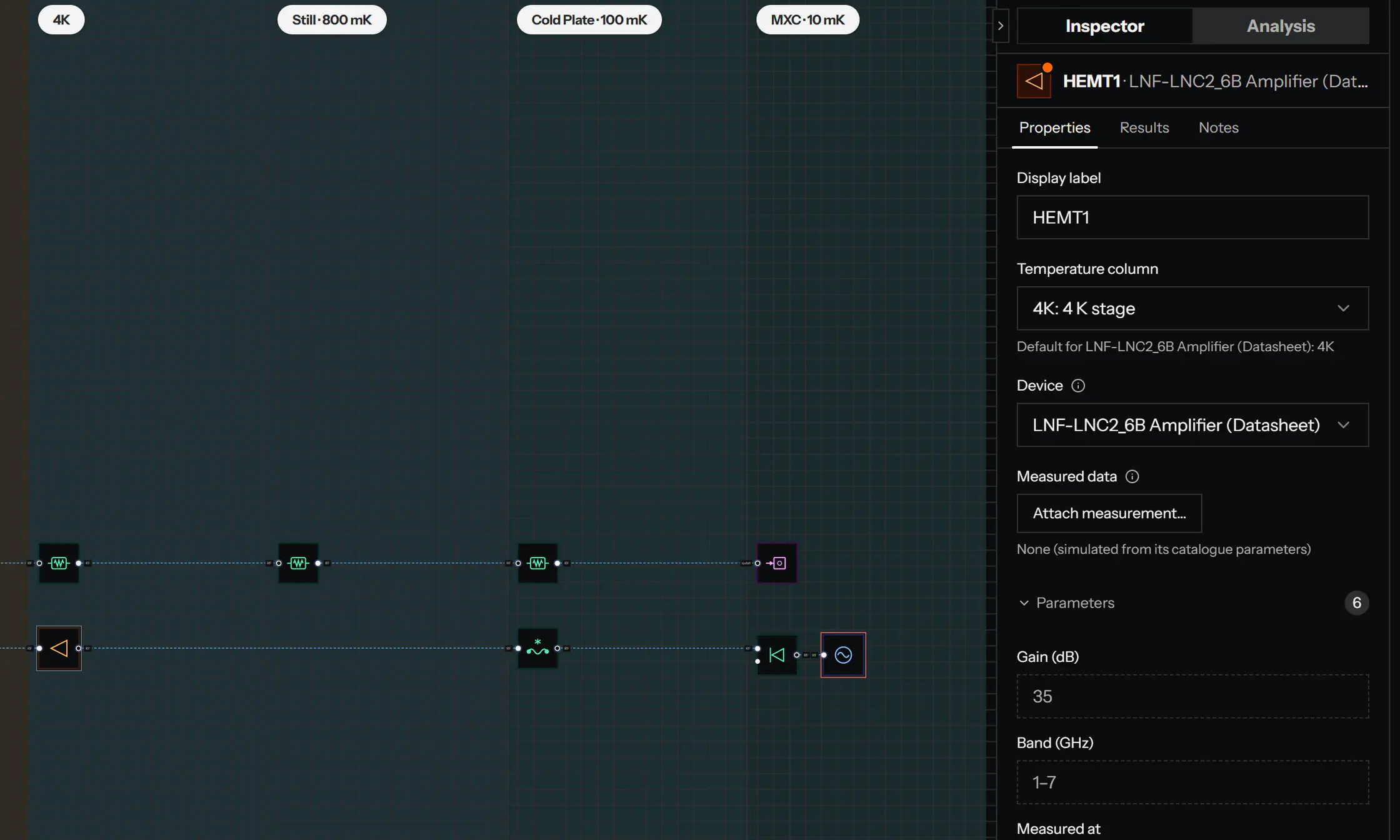
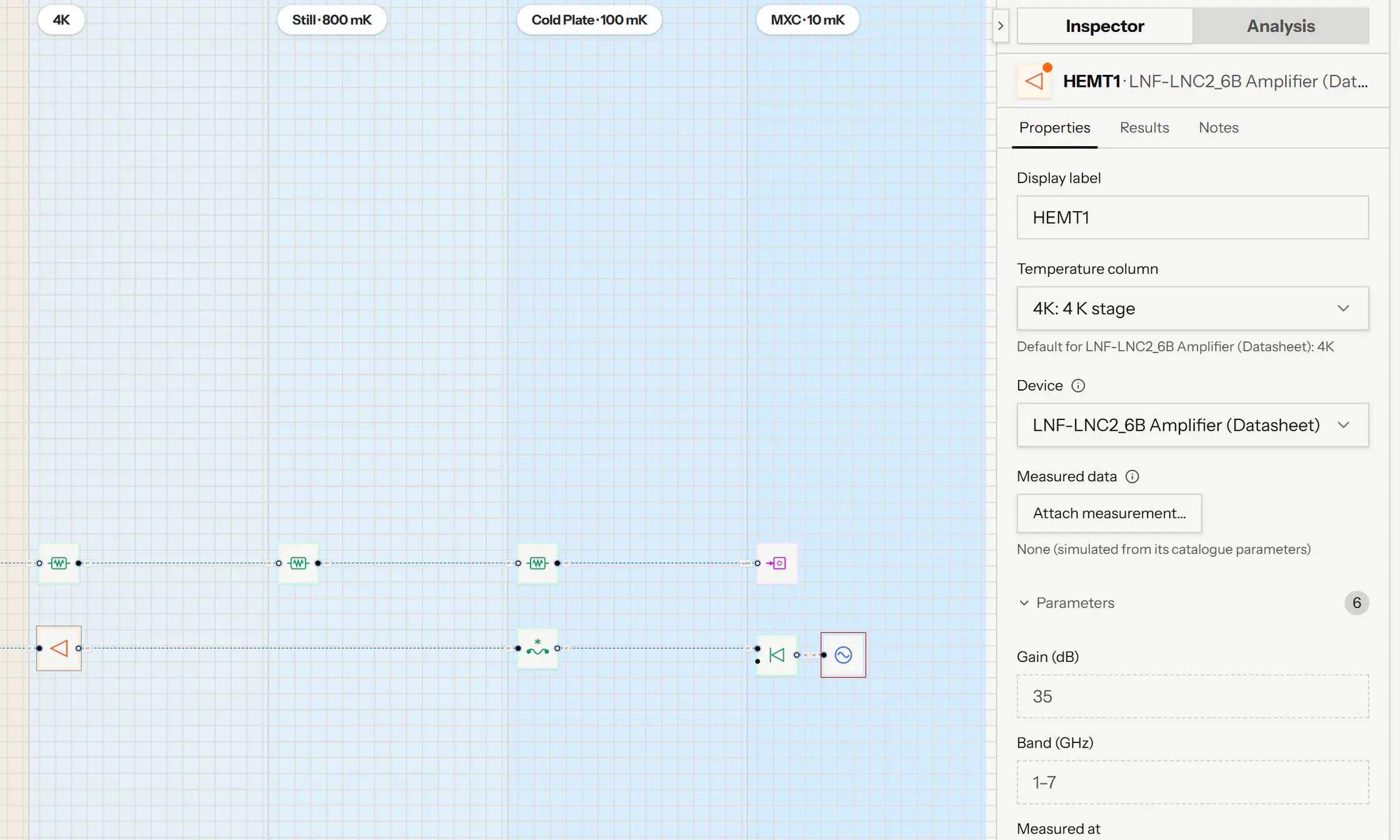
Swipe the screenshot sideways to see all of it.
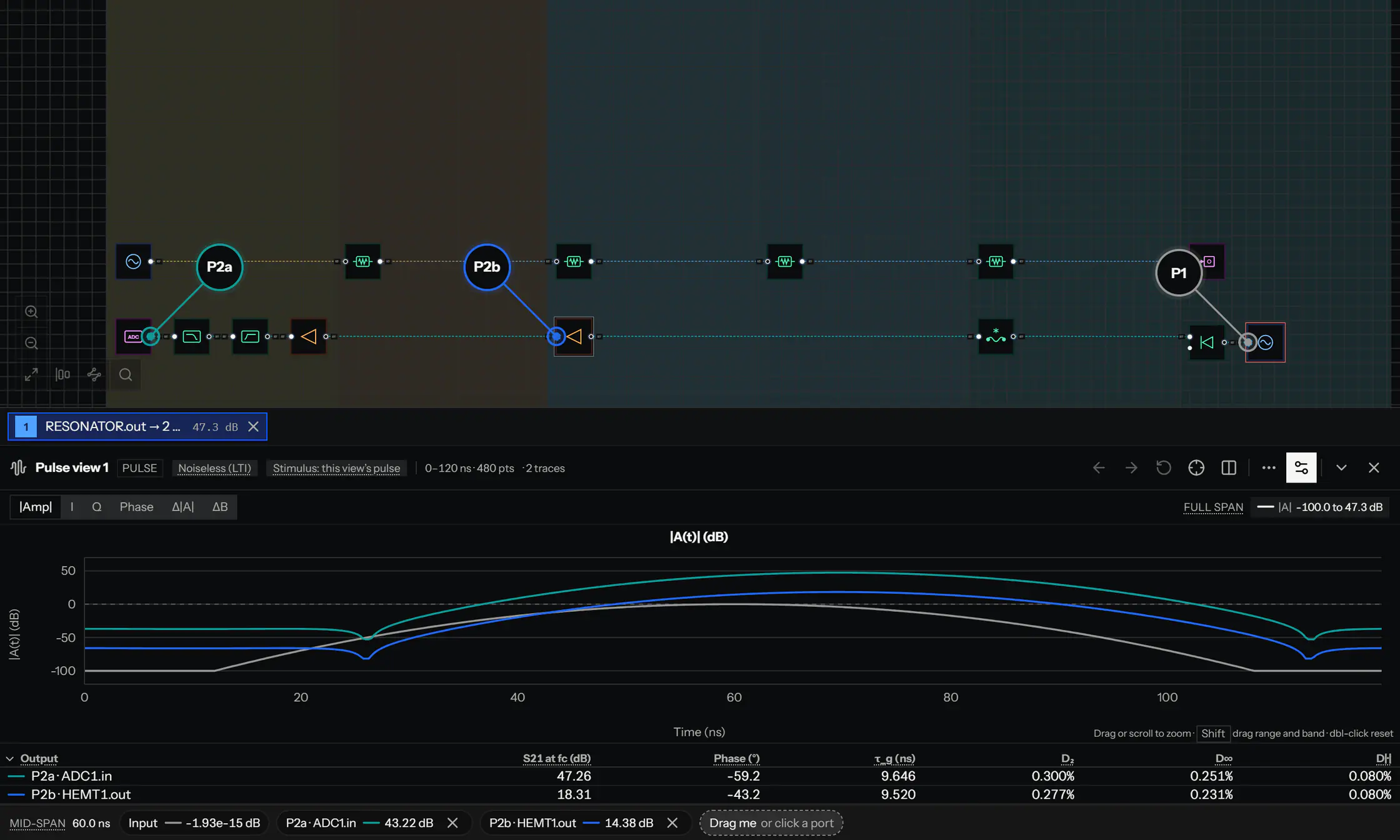
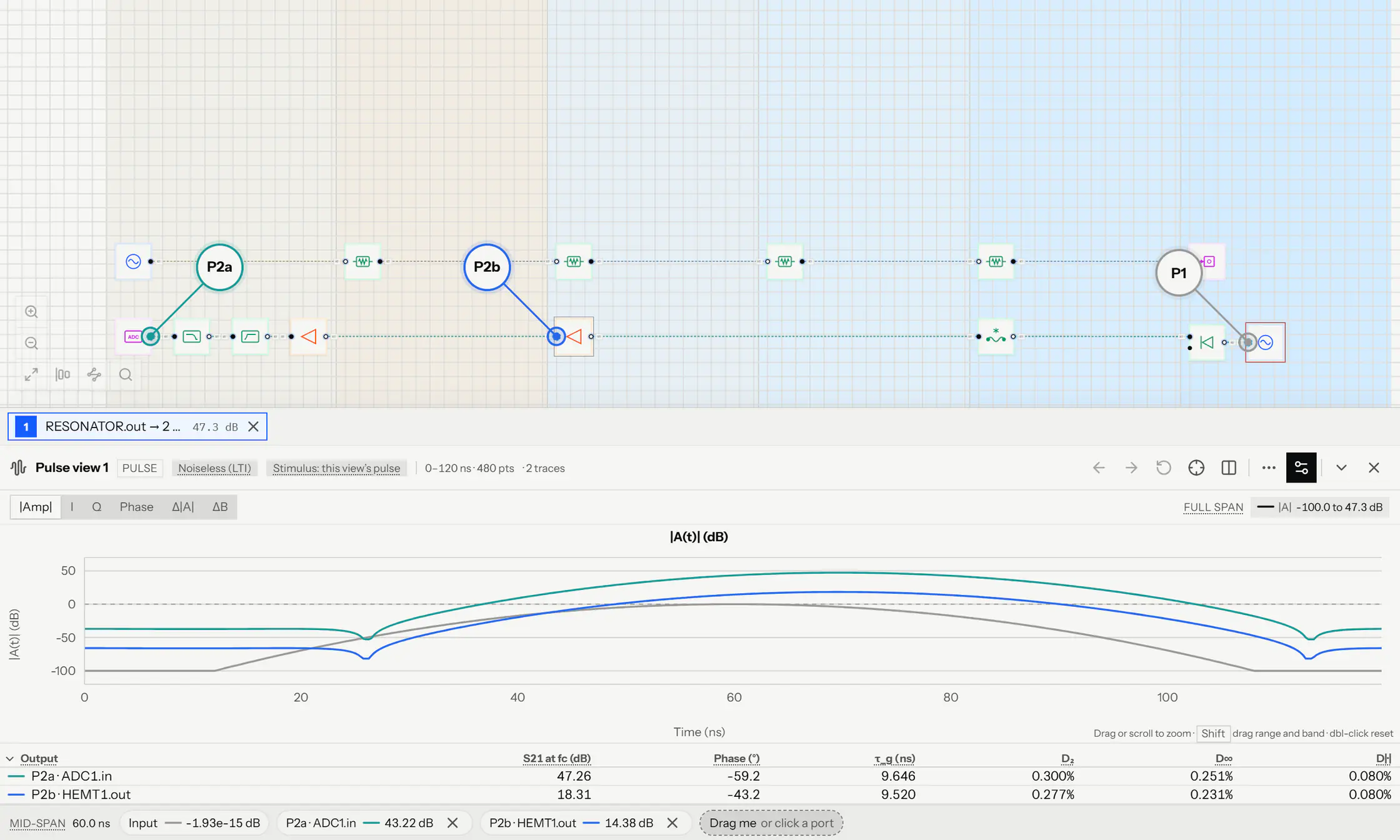
Swipe the screenshot sideways to see all of it.
Swipe the screenshot sideways to see all of it.
4
The Components Library.
Real manufacturer data.
It models real parts from manufacturer datasheets and published measurements, so the chain you simulate is made of parts you can buy.
Our growing list includes
- Low Noise Factory (LNF)
- Zurich Instruments
- IntelliConnect
- Kelvin Quantum
- QuantCore
5
Four disciplines in one shared space.
Physicists, RF and microwave engineers, cryogenic engineers and control engineers each own part of a control chain, and each usually works in their own tools and files. AnalogLab gives them one centralised space: one design, in which each of them sees the parts, the plates and the readings the others are working on.
| Symbol | Discipline | Brings to the design | Reads in AnalogLab |
|---|---|---|---|
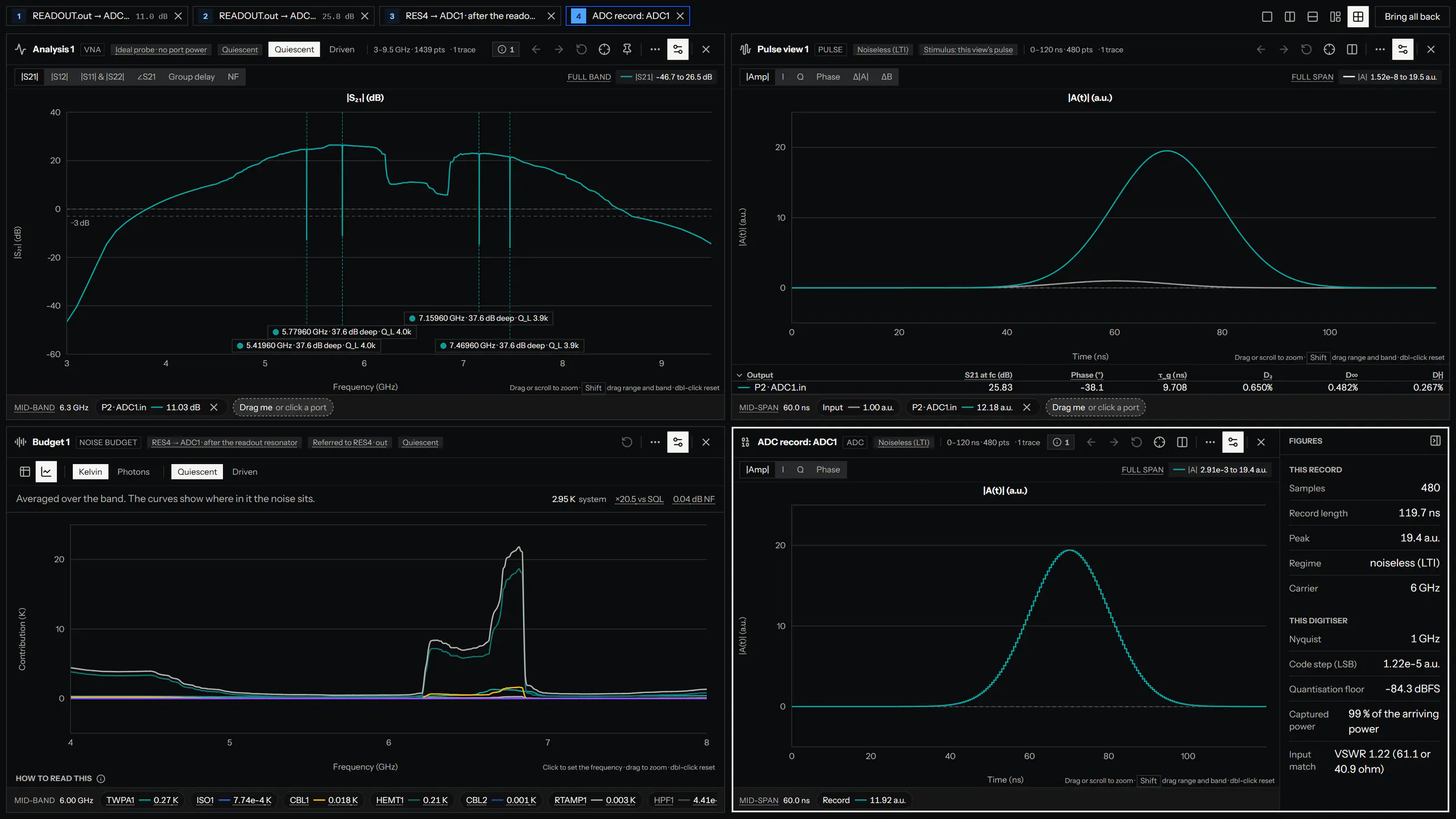
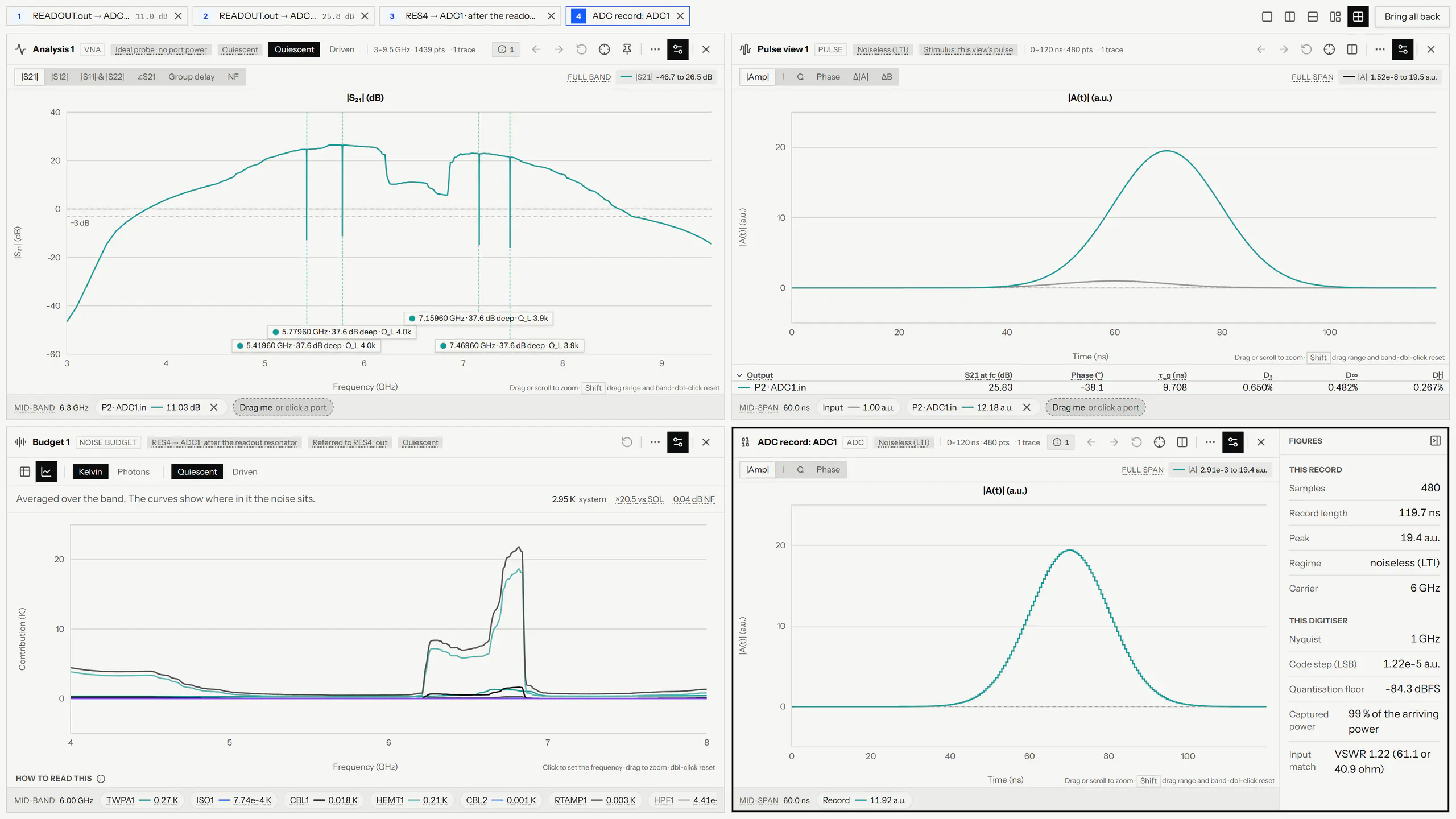
| Physicists | What the qubit needs from its drive and its readout. | The pulse as it reaches the qubit (Fig. 4), and the readout chain’s system noise (Fig. 2). | |
| RF and microwave engineers | The parts and how they are wired: gain, loss, filtering, isolation. | Each part’s |S21| curve, side by side with another’s (Fig. 5.1), and the chain’s response across frequency (Fig. 3). | |
| Cryogenic engineers | Which part sits on which plate, at what temperature. | Every part on its plate (Fig. 5.2), and each part’s share of the noise (Fig. 5.4). | |
| Control engineers | The pulses the room-temperature electronics send down the line. | The pulse as it travels, probed anywhere along the chain (Fig. 5.3). |
6
Questions about AnalogLab, the chain and the fridge.
1What does Coherence Engine do?
We make system-level design and validation tools for quantum control. Hardware teams use them to design, simulate and check their control systems before they build them, so there are fewer hardware iterations and bring-up is faster.
2What does AnalogLab simulate?
The analogue control path of a superconducting quantum computer: from the room-temperature electronics, down the cryogenic chain to the qubit, and back. It models noise, distortion and the pulse envelope, and what the chain does to the qubit’s readout: its signal-to-noise ratio and the Stark shift at the qubit.
3Is it tied to one hardware vendor?
No. It is vendor-neutral. You can model parts from different suppliers side by side and compare them before you buy.
4Who is it for?
Everyone who designs or buys the control path: physicists, RF and microwave engineers, cryogenic engineers and control engineers, and the people who sign off the hardware. How they work together in it
5Why simulate before building?
Every try on real hardware means warming the fridge, changing a part and cooling it again: days each time. Simulating first lets you compare the choices and spend fridge time on the ones that matter.
6What parts are in the library?
55 real parts with datasheet or measured data, including 23 CryoCoax cables, across 53 component types: sources, lumped, attenuators, cables, filters, splitters & switches, isolators & circulators, instruments & loads, amplifiers, mixers, qubits. Our growing list of manufacturers includes Low Noise Factory (LNF), Zurich Instruments, IntelliConnect, Kelvin Quantum and QuantCore. See the Components Library
7How do I become a design partner?
Tell us about your system through the contact form. We work with a small number of teams at a time. Go to the form
Know a group building quantum hardware?
Introduce us, and they can try their next wiring change on screen before it goes in the fridge. They will thank you!
Or write to info@coherenceengine.tech